
Ceiling Water Damage Drying and Drywall Repair
A stain spreading across your ceiling or a bulge that wasn't there yesterday is alarming, and it usually means water has been traveling through the structure above you.
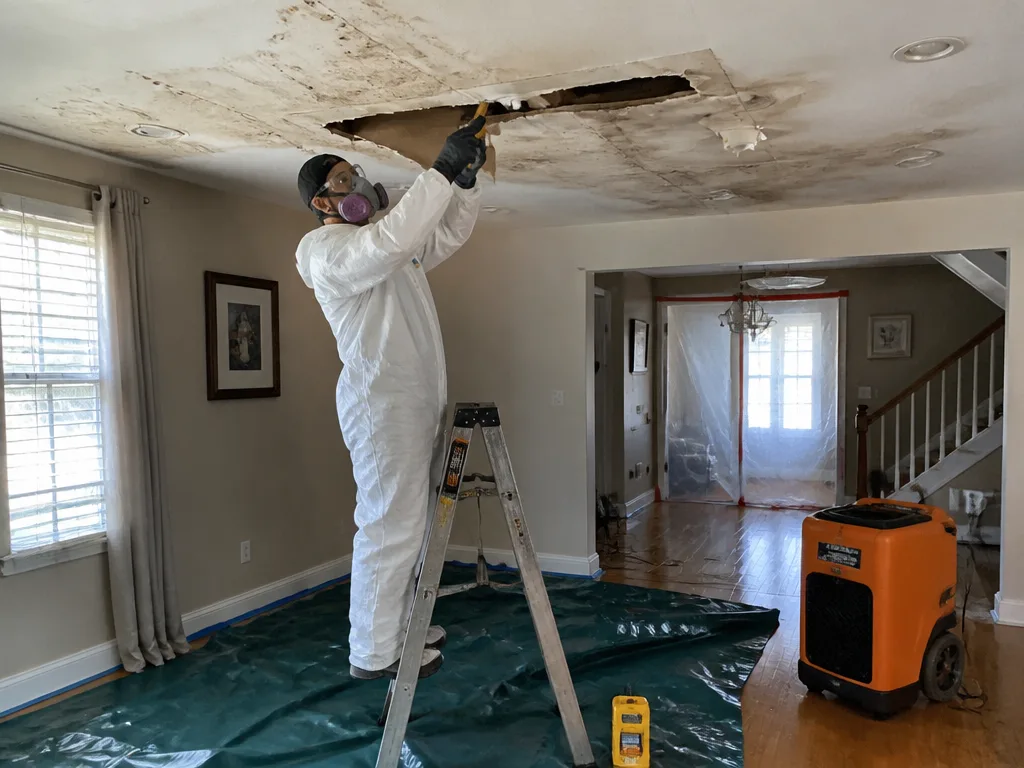
About ceiling water damage
Ceiling water damage covers more than a visible stain. Water that enters from a roof penetration, an upstairs bathroom, a failed supply line, or condensation can soak insulation and the drywall beneath the finish, and the damage often spreads before anyone sees it. Our service includes moisture assessment, removal of saturated materials, structural drying with equipment placed to pull moisture out of the ceiling cavity, and drywall patching or full panel replacement with finishing so seams blend into the surrounding surface. This service suits homeowners dealing with a fresh leak, landlords who need a unit back in rentable condition, and business owners who cannot afford extended downtime. Our restoration specialists document conditions as they work so you understand what was affected and what was done. Whether the damage is small or spans a large section of the room, our team will explain the scope before any repair begins.
Signs you need ceiling water damage
- A brown or yellow stain appears on the ceiling and grows larger after rain or plumbing use above.
- The ceiling feels soft or spongy when you press gently near a stained area.
- Paint is bubbling, peeling, or flaking away from a section of the ceiling surface.
- A visible sag or bow forms in the drywall, especially in the center of a room.
- You notice a musty smell near the ceiling or a damp feeling in the air below the stain.
- Dripping water or wet spots appear during storms, even when the roof looks intact from below.
Why choose Water Damage Repair?
- Our restoration specialists focus exclusively on water damage restoration, so ceiling work is part of what we do every day.
- Local crews are positioned across the country, which helps us respond quickly wherever your property is located.
- We explain the scope of work and the drying process in plain language before any equipment is set up.
- Our team documents moisture readings and repairs so you have a clear record of the work performed.
- We handle drying and drywall repair together, so you do not need to coordinate separate contractors for the job.
- We treat every property with the same care whether it is a single-family home, a rental unit, or a commercial space.
From phone call to finished job
Four straightforward steps. No upsells.
We start with a phone call to learn the size of the affected area, the water source, and how quickly the crew can get to you.
Once on site, a restoration specialist checks moisture levels and hidden dampness behind walls to map out exactly how far the water traveled.
Our crew pulls out standing water, sets up drying equipment, and checks moisture readings each day until materials dry.
Once everything is dry, you receive a written summary of the work and can call our team with questions later.
What you get
Prompt drying limits the chance that moisture spreads into insulation, framing, and neighboring rooms.
Removing saturated drywall early can reduce the likelihood of mold developing in the ceiling cavity.
Clear documentation of the damage helps you prepare insurance claims with accurate records.
Drywall patching and finishing restore a smooth, uniform ceiling that matches the rest of the room.
Working with a single crew from inspection to repair keeps communication simple and the timeline predictable.
Repairs done on a sound, dry structure hold up better than cosmetic cover-ups over damp material.
Talk to a local pro now
(571) 760-4698Questions about ceiling water damage
Don't see your question? Call (571) 760-4698 and we'll answer it.
How do I know if my ceiling has water damage that needs professional help?
Look for stains that are growing, soft or sagging drywall, peeling paint, or a damp smell near the ceiling. Any of these signs suggests moisture is trapped above the surface. A restoration specialist can use moisture meters and inspection tools to find the true extent of the damage, which often reaches beyond what is visible from below.
Can a water-stained ceiling be dried out, or does the drywall always need replacing?
Some ceilings can be dried and kept in place if the drywall is still firm and the water was clean and recent. When drywall is soft, crumbling, or heavily saturated, removal and replacement is usually the safer choice. Our restoration specialists will test the material and tell you which approach fits your situation before any work begins.
How quickly should I call for ceiling water damage restoration after a leak?
Contact a restoration service as soon as you notice water on the ceiling, ideally within hours. Moisture left in drywall and insulation can spread and encourage mold growth within a couple of days. Fast response reduces the amount of material that must be removed and shortens the overall timeline for repairs.
Will the drywall repair match the rest of my ceiling?
Our team patches or replaces damaged sections, then applies joint compound, sanding, and paint matching so the repair blends with the surrounding surface. Texture and paint sheen can vary by age and finish, so we review the existing ceiling with you first. The goal is a result that looks consistent once the room is painted.
Do you work with insurance claims and property managers?
Yes. We provide written documentation of moisture readings, affected areas, and completed work that can support insurance claims and property management records. Our restoration specialists can coordinate with adjusters and managers so each party has the information it needs. Contact us to discuss your situation and what documentation you will need.
Need ceiling water damage today?
Real local restoration specialists. Careful work. One call away.