Dehumidification to Finish Drying Hidden Moisture
When water gets into a home or building, the visible wet spots are only part of the problem. Moisture soaks into drywall, wood framing, subfloors, and insulation, where it can linger long after the surface looks dry.
About dehumidification
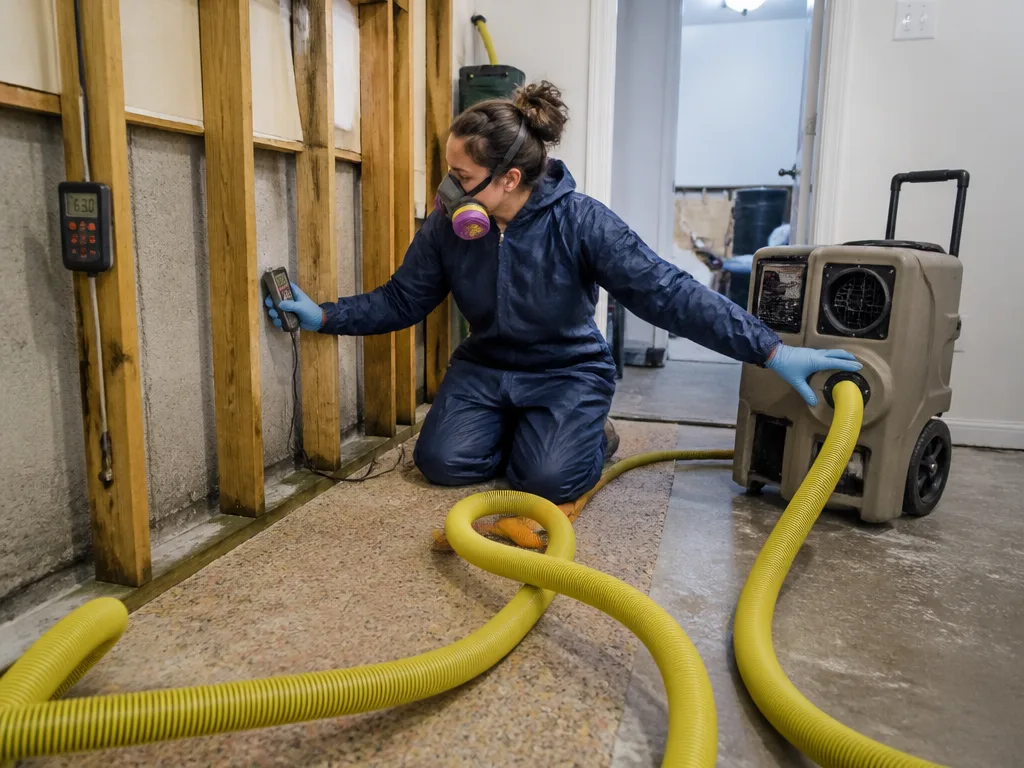
Dehumidification is a focused part of water damage restoration. It involves selecting and placing dehumidifiers based on the size of the affected room, the materials involved, and the moisture levels we measure. Our restoration specialists check readings at set intervals, adjust equipment as conditions change, and document progress so you can see how drying is going. This service suits homeowners dealing with a recent water event, property managers responding to tenant losses, and business owners who need to reopen without ongoing moisture concerns. It is also useful when a previous cleanup seemed complete but a room still smells damp or feels humid. We work in every region we serve and coordinate with the rest of the restoration process so drying, cleanup, and repairs happen in the right order.
Signs you need dehumidification
- A musty smell lingers in a room even after the visible water has been cleaned up.
- Baseboards, drywall, or flooring feel soft or spongy days after a water event.
- Paint or wallpaper bubbles, peels, or discolors near a previously wet wall.
- Floors feel cool or damp underfoot when the surrounding area appears dry.
- Humidity stays high in a space that was recently flooded or had a leak.
- Visible condensation keeps forming on windows or walls after water has been removed.
Why choose Water Damage Repair?
- Our restoration specialists are trained to measure moisture and set dehumidification plans for each space.
- We serve customers nationwide with local crews wherever you are, so help can be dispatched quickly.
- Our team documents readings and progress so you always know where the drying process stands.
- We coordinate dehumidification with cleanup and repairs so the project moves in the right order.
- Our national footprint lets us scale from a single room to large commercial losses in every region we serve.
- We communicate clearly about equipment placement, timelines, and next steps from start to finish.
From phone call to finished job
Four straightforward steps. No upsells.
We start with a phone call to learn the size of the affected area, the water source, and how quickly the crew can get to you.
Once on site, a restoration specialist checks moisture levels and hidden dampness behind walls to map out exactly how far the water traveled.
Our crew pulls out standing water, sets up drying equipment, and checks moisture readings each day until materials dry.
Once everything is dry, you receive a written summary of the work and can call our team with questions later.
What you get
Drying finishes more completely because moisture is pulled from materials, not just the surface.
Less moisture remaining in walls and floors means mold has fewer conditions to start growing.
Measured readings give you a clear view of how drying progresses over the project.
Faster return to normal use of rooms, since materials reach dry standards sooner.
Reduced risk of warping in wood floors, cabinets, and trim caused by trapped moisture.
Better indoor air quality during and after restoration, with humidity kept under control.
Talk to a local pro now
(571) 760-4698Questions about dehumidification
Don't see your question? Call (571) 760-4698 and we'll answer it.
How do I know if a space still has hidden moisture after water damage?
Hidden moisture often shows up as a musty odor, soft or spongy materials, bubbling paint, or a room that stays humid. Our restoration specialists use moisture meters to check walls, floors, and framing, which reveals dampness that is not visible to the eye. If readings remain above dry standards, dehumidification is usually the next step to continue drying.
How long does dehumidification usually take?
The timeline depends on the size of the affected area, the materials involved, and how much water was absorbed. Many projects run for several days, with our restoration specialists checking moisture readings at set intervals. We adjust equipment as materials dry and will let you know when readings reach the target levels for completion.
Will dehumidifiers run in my home while I am there?
Our team will explain the placement, power needs, and any access requirements before setup. Where possible, we work around your daily routine and keep you informed about what to expect during the process.
Can dehumidification help prevent mold after a water event?
Dehumidification reduces the moisture that mold needs to start growing, which lowers the risk after a water event. It does not replace a full cleanup where contamination is present, so our restoration specialists assess the situation first. When drying is handled promptly and thoroughly, materials have fewer conditions that encourage mold to develop.
Do you offer dehumidification service across the United States?
Yes. We serve customers across the United States with local crews wherever you are, from coast to coast. Contact our team to describe your situation, and we will confirm availability in your area and outline the steps for getting dehumidification started as quickly as possible.
Need dehumidification today?
Real local restoration specialists. Careful work. One call away.