Hardwood Floor Drying That Saves Your Boards
When water reaches hardwood, the clock starts running. Boards absorb moisture quickly, and if they stay wet, they can cup, buckle, or lift away from the subfloor.
About hardwood floor drying
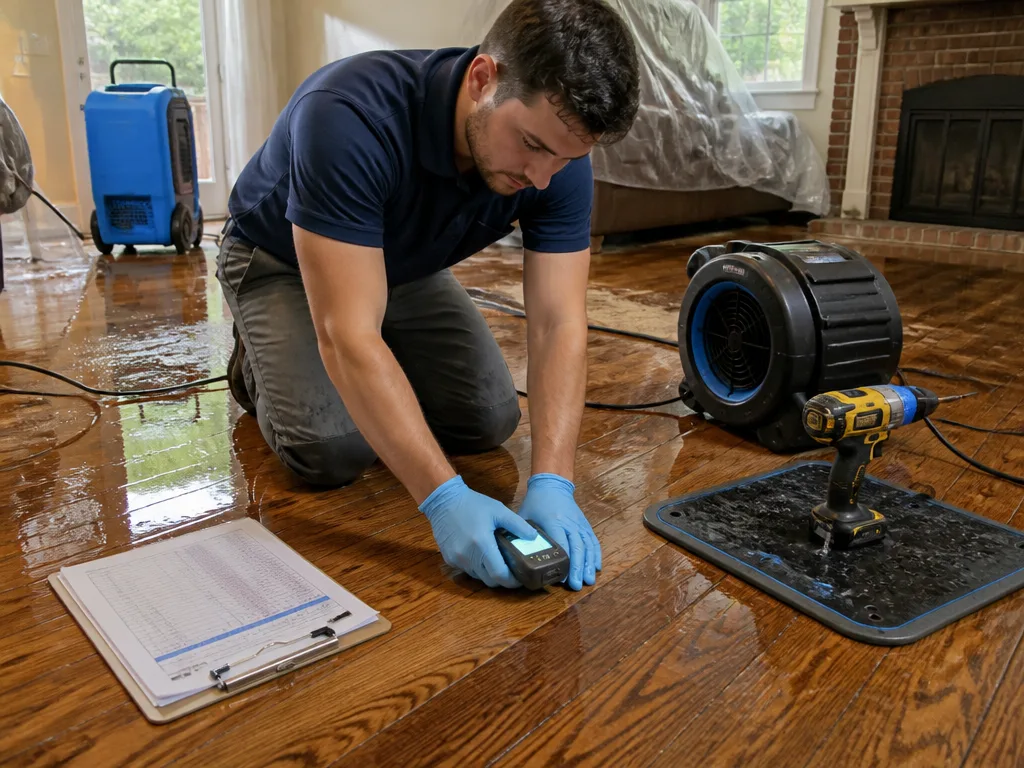
Hardwood floor drying is a focused restoration service that addresses moisture trapped in wood flooring after a leak, flood, appliance-free plumbing failure, or storm intrusion. Our process begins with an assessment of the affected area, including the type of wood, the finish, the subfloor material, and how far water has traveled. Restoration specialists then establish a drying plan that balances airflow, humidity control, and monitoring so moisture leaves the boards gradually rather than all at once. Gradual drying matters because rapid heat or aggressive drying can cause boards to split or gap. Throughout the job, we document readings and share progress updates so you understand where your floors stand. This service suits homeowners with solid or engineered hardwood, property managers protecting rental units, and business owners who need flooring back in service with minimal disruption.
Signs you need hardwood floor drying
- Boards near the wall or a doorway look raised, curled, or uneven after water exposure.
- The floor feels soft, spongy, or gives slightly underfoot in one area.
- Dark staining or discoloration appears on the wood surface after a leak or spill.
- A musty smell lingers in a room even after the visible water has been wiped away.
- Gaps or seams between boards have widened noticeably since the water event.
- Moisture collects under rugs or furniture where air cannot circulate freely.
Why choose Water Damage Repair?
- Our restoration specialists are trained to read moisture levels accurately and adjust drying plans as conditions change.
- We operate local crews across the country, so a team can often be dispatched quickly after your call.
- Our approach prioritizes saving your existing hardwood whenever the wood can safely be dried and stabilized.
- Every job includes daily moisture documentation so you can see measurable progress throughout the process.
- We communicate clearly about what we find, what we recommend, and what outcome to expect for your floors.
- Water Damage Repair brings a national footprint and consistent standards to every drying project we take on.
From phone call to finished job
Four straightforward steps. No upsells.
We start with a phone call to learn the size of the affected area, the water source, and how quickly the crew can get to you.
Once on site, a restoration specialist checks moisture levels and hidden dampness behind walls to map out exactly how far the water traveled.
Our crew pulls out standing water, sets up drying equipment, and checks moisture readings each day until materials dry.
Once everything is dry, you receive a written summary of the work and can call our team with questions later.
What you get
Drying boards in place can preserve the original floor rather than forcing an early replacement.
Controlled airflow reduces the risk of cupping, buckling, and permanent board distortion.
Regular moisture readings show you objective proof of when the floor reaches a safe, dry level.
Gradual drying lowers the chance of splitting or gapping that rapid drying can cause.
Limiting the spread of moisture helps protect adjacent subfloors, baseboards, and nearby walls.
A documented drying plan gives you clear progress updates so you can plan your schedule with confidence.
Talk to a local pro now
(571) 760-4698Questions about hardwood floor drying
Don't see your question? Call (571) 760-4698 and we'll answer it.
How do you know if my hardwood floor can be dried instead of replaced?
Our restoration specialists check moisture levels across the boards and subfloor, look for cupping or lifting, and assess how long water was present. If the wood can return to a stable moisture content without permanent distortion, we dry it in place. Your floor's condition at the end of the assessment determines the recommendation, and we explain our reasoning clearly before any work begins.
How long does hardwood floor drying usually take?
Drying time depends on the amount of water, the type of wood, the subfloor, the room's humidity, and the airflow available. Many projects run several days, and some take longer when moisture sits beneath the surface. We take daily readings and tell you when the floor reaches a dry, stable level so you know exactly where the job stands at each stage.
Will my floor look the same after drying?
In many cases, boards that dry in place settle back close to their original appearance, especially when moisture is removed gradually. Some boards may show light staining or minor finish changes that require refinishing later. Our team reviews the outcome with you once drying is complete and explains whether any cosmetic follow-up would help restore the look you had before the water damage.
Do I need to move furniture or clear the room before you arrive?
It helps if you move valuables, electronics, and small items out of the affected area so our restoration specialists can access the floor and place equipment properly. Lightweight furniture can often be relocated by you, while heavy pieces may be handled by our crew. Let us know about any fragile or sentimental items so we can plan safe handling from the start.
Is hardwood floor drying covered by insurance?
Coverage depends on the cause of the water damage and the terms of your policy. Sudden events such as burst pipes or storm intrusion are often treated differently than long-term leaks or maintenance issues. We can provide documentation of the work, including moisture readings and drying logs, to support your claim. Contact your insurance provider to confirm what your specific policy includes.
Need hardwood floor drying today?
Real local restoration specialists. Careful work. One call away.